

You’ve seen them on Instagram. The thrift vendors with 10K+ followers, selling out drops in minutes, making real money from secondhand clothes.
You’ve probably thought: I could do that.
You’re right. You could.
The thrift resale business in Nigeria is booming. With the economy squeezing everyone’s pockets, more people are turning to pre-loved fashion. That’s your opportunity.
Here’s how to start — from sourcing your first bale to making your first sale.
Step 1: Understand the Business Model
Thrift reselling is simple:
- Buy clothes in bulk (cheap)
- Sort, clean, and photograph them
- Sell individually (at a markup)
Your profit comes from the gap between what you paid per item in a bale and what someone will pay for a single, curated piece.
Example:
- You buy a bale for ₦50,000
- It contains 100 items
- That’s ₦500 per item (your cost)
- You sell each item for ₦2,000 – ₦5,000
- Your profit margin: 300% – 900%
The math works. But only if you source well, pick good items, and actually move the stock.
Step 2: Source Your Inventory
Where to buy bales in Lagos:
| Market | Location | Notes |
|---|---|---|
| Katangua | Abule Egba | Largest selection, best for beginners |
| Aswani | Isolo | Smaller, good prices |
| Oshodi Arena | Oshodi | Bulk bale section available |
| Badagry | Near Seme border | Source prices, great for volume |
Bale types to know:
- Grade A (First Grade): Highest quality, least sorting needed. More expensive.
- Grade B: Mixed quality. Requires more sorting but better margins.
- Category bales: Jeans only, tops only, dresses only. Easier to sell if you’re niching down.
Starting budget:
- ₦30,000 – ₦50,000 for your first bale
- ₦10,000 – ₦20,000 for cleaning supplies, hangers, packaging
- Total: ₦40,000 – ₦70,000 to start
Step 3: Sort and Prepare
When you open a bale, you’ll find three types of items:
- Sellable as-is: Clean, good condition, ready to list
- Needs work: Minor stains, missing buttons, needs ironing
- Unsellable: Damaged, heavily stained, outdated styles
Your job is to maximize category 1, salvage category 2, and quickly discard category 3.
Preparation checklist:
- Wash everything (even if it looks clean)
- Iron or steam to remove wrinkles
- Check for stains, holes, missing buttons
- Repair small issues if cost-effective
- Sort by category: tops, bottoms, dresses, etc.
Step 4: Price Your Items
Pricing is where most beginners mess up. Too high and nothing moves. Too low and you’re working for free.
Pricing formula:
Selling price = (Cost per item × 3) + perceived value adjustment
Perceived value factors:
- Brand name (+₦500 – ₦2,000)
- Current trend (+₦500 – ₦1,000)
- Excellent condition (+₦300 – ₦500)
- Unique/rare piece (+₦1,000+)
Example pricing:
| Item | Cost | Base (×3) | Adjustments | Final Price |
|---|---|---|---|---|
| Plain top | ₦500 | ₦1,500 | None | ₦1,500 |
| Zara blouse | ₦500 | ₦1,500 | +₦1,000 (brand) | ₦2,500 |
| Vintage denim | ₦500 | ₦1,500 | +₦1,500 (trend + rare) | ₦3,000 |
Step 5: Photograph Like a Pro
Your photos are your storefront. Bad photos = no sales.
The basics:
- Natural lighting (near a window, or outside)
- Plain background (white wall, bedsheet, or backdrop)
- Multiple angles: front, back, details, labels
- Show any flaws honestly
Level up:
- Flat lay styling (arranged neatly on a surface)
- On-body shots (you or a friend modeling)
- Consistent aesthetic across all listings
You don’t need a fancy camera. A clean smartphone photo with good lighting beats a blurry DSLR shot every time.
Step 6: Choose Your Sales Channel
Option 1: Instagram/WhatsApp
- Free to start
- You handle everything: marketing, DMs, payments, delivery
- Time-consuming but gives you full control
Option 2: Physical market stall
- Higher overhead (rent, transport)
- Face-to-face selling
- Limited to local customers
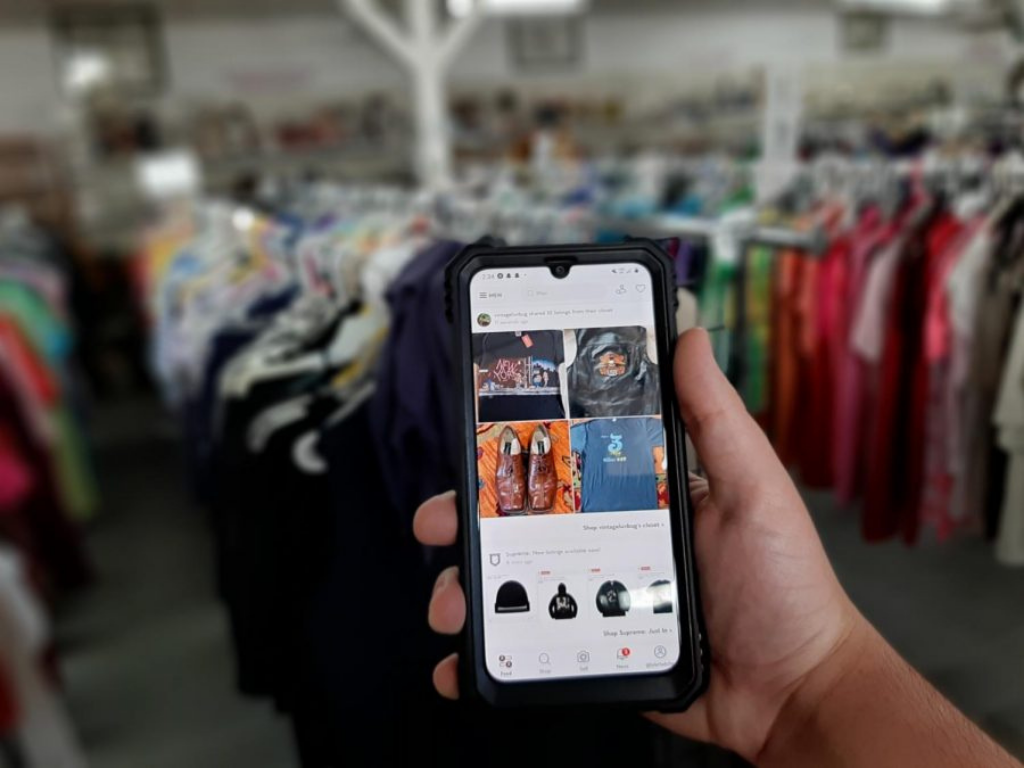
Option 3: VYNT
- List items in minutes
- VYNT handles logistics and payments
- Items are quality-verified (builds buyer trust)
- Access to 12,000+ active shoppers
- You focus on sourcing and listing — we handle the rest
Pro tip: Many successful sellers use multiple channels. Source from markets, sell the best pieces on VYNT, move the rest on Instagram.
Step 7: Scale Up
Once you’ve made your first few sales, reinvest.
Growth path:
- Month 1-2: 1 bale, learn the process, make first sales
- Month 3-4: 2-3 bales, identify what sells best for you
- Month 5-6: Specialize (e.g., “I only sell denim” or “vintage dresses only”)
- Month 7+: Build a brand, grow your following, consider bulk orders
What successful thrift sellers do:
- Post consistently (new items weekly)
- Build a recognizable style/niche
- Respond to customers fast
- Reinvest profits into better inventory
- Track what sells and what doesn’t
Common Mistakes to Avoid
❌ Buying random bales without checking quality first Always inspect before you buy, or buy from trusted suppliers.
❌ Overpricing because “it’s designer” A secondhand item is still secondhand. Price for the Lagos market, not London.
❌ Holding onto dead stock If it hasn’t sold in 30 days, drop the price or bundle it. Don’t let it take up space.
❌ Ignoring customer questions Slow replies = lost sales. Respond within hours, not days.
❌ No system for tracking inventory Even a simple spreadsheet helps. Know what you bought, what you sold, and your margins.
Start Selling on VYNT Today
You don’t need a shop. You don’t need 10K followers. You don’t need a massive budget.
You need:
- A bale (or even just clothes from your own wardrobe)
- A phone with a decent camera
- The VYNT app
List your first item in under 3 minutes. VYNT handles verification, logistics, and secure payments. You get paid when the buyer receives their item.
Ready to turn thrifting into income?
👉 Download VYNT and list your first item.
This post was published on the VYNT Blog. VYNT is Nigeria’s fashion marketplace — buy, sell, and discover pre-loved fashion.
Images for This Post
- Hero: Okrika bale / thrift business setup
- Section: Thrift market sourcing
- Section: Clothes being sorted/prepared
- Section: Phone photography of clothes
- CTA: VYNT seller interface or branded graphic
SEO Notes
- Target keyword: “thrift business Nigeria”
- Secondary: “okrika business”, “how to sell thrift clothes”, “reselling clothes Nigeria”
- URL slug:
/start-thrift-reselling-business-nigeria-2026